Fence height
Coordinate the privacy or containment goal with placement, lot scale, and current requirements.
Privacy · semi-private · picket
Vinyl fencing can create a clean privacy boundary or a more open decorative edge without routine painting or staining. The right panel profile, post layout, grade treatment, and gate framing still depend on the property.
Residential yards · side passages · patios · gates · repairs
Vinyl fencing for Chicago properties
Vinyl fence systems use posts, rails, panels or pickets, caps, reinforcement, gate frames, and hardware that need to work together. Panel height and color are only the visible part of the specification.
Tight gangways, detached garages, alley access, grade changes, wind exposure, existing concrete, and close neighboring yards all affect the layout. A useful vinyl fence installation estimate accounts for those conditions before the panel count is finalized.
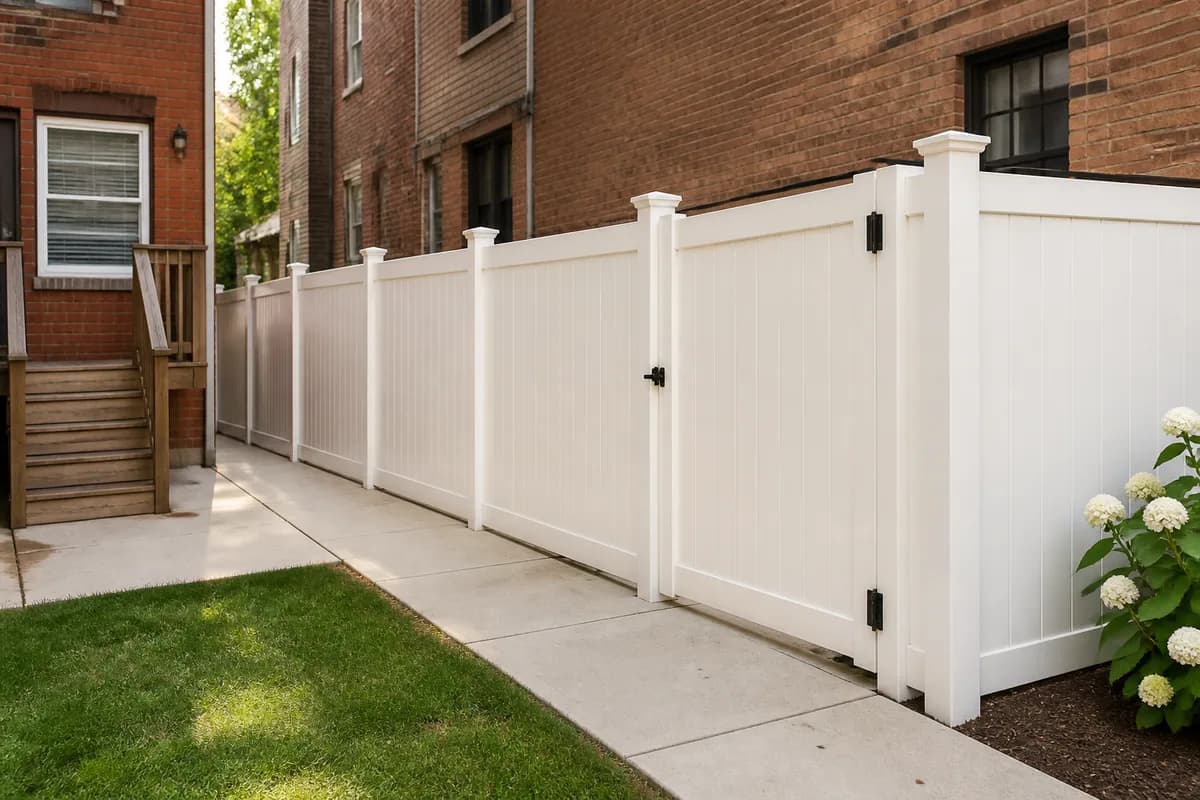
Vinyl fence styles
The profile should follow the goal of the boundary, not simply the most familiar catalog image.
Vinyl privacy fencing
A solid vinyl fence can screen a rear yard, patio, parking edge, or close neighbor-facing line. On a compact Chicago lot, that screening also changes airflow, shadow, and the feeling of space. Taller panels and wide gates deserve careful post and footing planning.
Near corners, driveways, and alleys, preserving sightlines may be important. The address, fence placement, and current height rules should be checked before a solid profile is treated as the default answer.
Six details that shape installation
Coordinate the privacy or containment goal with placement, lot scale, and current requirements.
Choose stepping or an allowed racking approach with deliberate bottom gaps and transitions.
Solid panels catch more wind than open fencing, increasing the importance of posts, footings, and gates.
Set clear width, hinge direction, reinforcement, latch position, and grade around daily use.
Gangways, alleys, landscaping, garages, and existing concrete affect staging and installation.
Plan clean connections at buildings, other fence materials, grade breaks, and neighbor-facing lines.
Vinyl fence installation cost
Footage matters, but panel profile, height, posts, gates, old-fence removal, grade, access, concrete, and permit needs can materially change the project.
Request a Vinyl Fence EstimateVinyl fence maintenance & repair
Vinyl avoids routine finish work, but panels and hardware still need cleaning and inspection. Impact can crack a panel or rail, frost or soil movement can affect posts, and a gate can sag when hardware, framing, or its support post shifts.
A localized repair may be practical when compatible components remain available and the surrounding system is aligned. Discontinued profiles, multiple damaged sections, or widespread post movement can make a larger replacement scope more sensible.
Vinyl installation process
Good panel alignment begins with a measured layout and a clear decision about how the system handles slope, corners, access, and transitions.
Containment, privacy, access, appearance, repair, or security—start with what the fence needs to do.
Measure the line, look at grade and access, discuss gates, and flag property or permit questions early.
Align on material, height, finish, hardware, removal work, and the details included in the estimate.
Set the fence to the agreed layout, check operation, and review the completed work and care needs.
Chain link preserves sightlines and can fit compact working areas where a solid panel would feel visually heavy.
Explore chain link installationWood can create solid privacy with varied board patterns, while requiring more routine finish and board care.
Compare wood privacy fencingReview the practical differences among chain link, wood, vinyl, aluminum, privacy, gates, and repair options.
See all fence servicesVinyl fence cost changes with measured footage, panel profile, height, posts, gates, old-fence removal, grade, access, concrete work, and permit needs. A solid privacy fence with several gates is a different scope from a short open picket boundary, so a measured estimate is more useful than a generic per-foot range.
Solid vinyl panels can create substantial visual screening, while semi-private and picket styles preserve more airflow and openness. Height, wind exposure, lot size, gate placement, and Chicago rules should be considered before choosing a fully solid design.
Many vinyl systems can be stepped or, when the product allows, racked to follow grade. The best approach depends on the slope, panel design, desired bottom gap, drainage, and gate locations. Grade should be measured before the panel layout is selected.
Vinyl does not require routine painting or staining, but it still benefits from cleaning and periodic checks of posts, caps, rails, panels, gates, and hardware. Impact damage, movement, or a sagging gate should be addressed before it stresses adjacent components.
Individual panels, rails, caps, or hardware can sometimes be replaced when compatible parts remain available and the posts are sound. Widespread movement, discontinued profiles, or multiple damaged sections may make partial or full replacement the more practical option.
Plan a vinyl fence
Share the Chicago property, approximate footage, preferred vinyl style and height, gate openings, old-fence condition, and any access or grade concern.